
POV: You’re an EMT or Work with a First Responder

HSAFP Executive Team March 11, 2026
After our January 2026 webinar, the HSAFP Executive Team reached out to three individuals who either worked as EMTs or collaborated with EMTs. In this lesson, you’ll read experiences from Rahul, Dr. Nelson, and Jessica, who have each worked with first responders and discuss their importance, below.
Meet Rahul, a former EMT and current medical school student
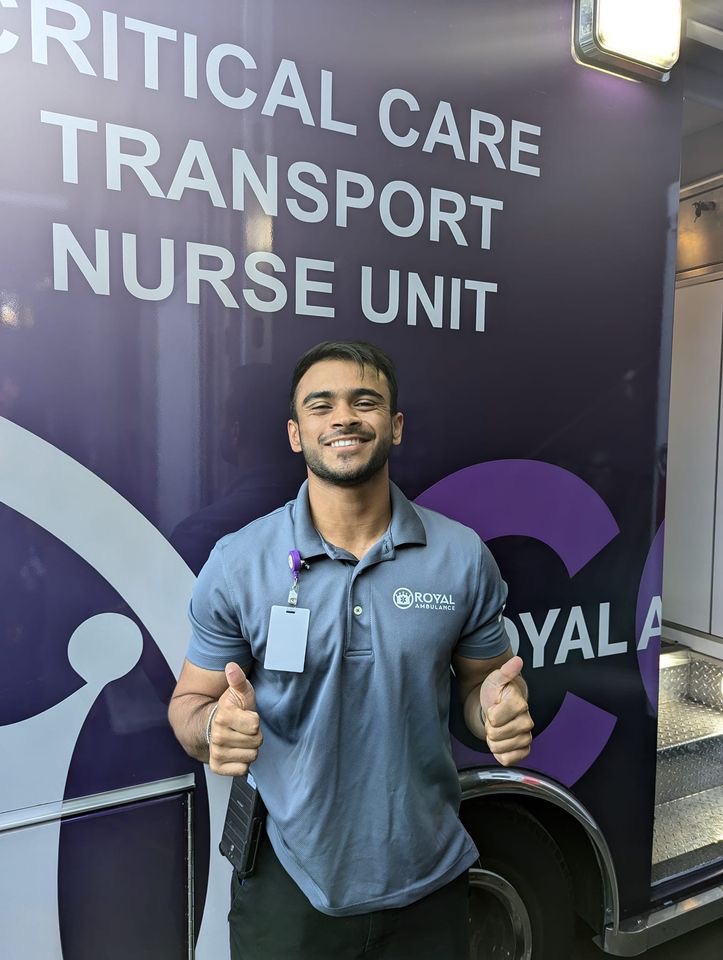
Rahul is a soon-to-be medical student and former EMT with experience in both interfacility and critical care transport. Rahul earned his undergraduate degree from the University of California, Berkeley, where he majored in molecular and cell biology and minored in data science. Rahul gained EMT certification during the summer between his freshman and sophomore academic years and worked as a Basic Life Support EMT part-time during school. He also pursued volunteer opportunities at sporting events, concerts, and festivals to practice his EMT skills in unique environments. After graduation, Rahul joined the critical care team and gained exposure to more complex medical cases, working alongside an RN.
From Rahul to HSAFP members:
“Working as an EMT was one of the best decisions I made on my journey to medical school. The role offers the rare opportunity to take meaningful responsibility for patient care while building a strong clinical foundation. As an EMT, you are exposed firsthand to a vast range of medical conditions and develop the ability to connect with diverse patient populations in moments of vulnerability.
If you have the opportunity to pursue critical care transport, I highly recommend it. You gain invaluable experience managing patients on ventilators, vasopressors, and even advanced life-support devices such as ECMO. The confidence you build in your clinical judgement and decision-making is something that sticks with you forever, regardless of the path you eventually choose. Just as importantly, you develop the ability to think methodically through complex, high-pressure situations.
EMT work is fun, meaningful, and an extraordinary window into medicine before committing to medical school. Do not be afraid to ask questions and trust yourself to dive into the deep end!”
Dr. Blair Nelson and his work with EMTs as an ER doctor
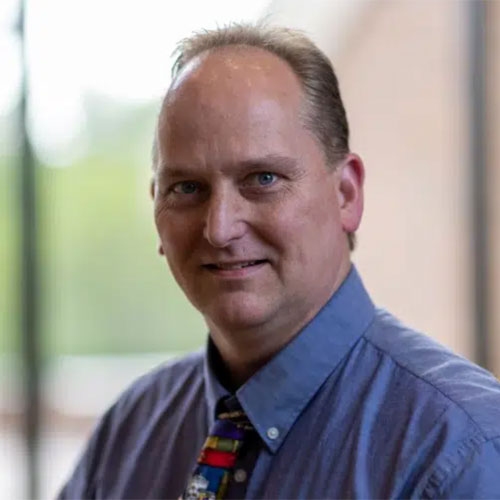
Dr. Blair Nelson worked as an Emergency Department physician for 25 years, where he fulfilled the Director of Medical Education role, training students at various levels of education throughout his clinical career. Since retiring from clinical medicine, he is teaching full-time as the Director of Didactic Education for a Physician Assistant program, a Director Physician Advisor for MedSchoolCoach, and has created several courses with the HSAFP Executive Team.
From Dr. Nelson to HSAFP members:
“Having worked with and trained countless EMTs over the years has forged my profound respect for their role on the healthcare team. This position is incredibly challenging for many reasons, but it offers [pre-med] students interested in a medical career the best experience. They acquire many skills that will help them in the future, including the ability to communicate and connect with patients navigating stressful situations. [Being an EMT] also affords great empathy and a glimpse into the honor of walking with patients during their most vulnerable moments.”
Jessica Kent Edwards‘ work in public health and first responders

Jessica Kent Edwards, MPH, RS – Jessica joined the Collins Center in 2025. She is a former local public health official and Registered Sanitarian who has significant experience with regional public health strategic planning and grant writing. She previously assisted in coordinating local emergency response efforts in her capacity as Co-Chair of the Metrowest Region 4AB Emergency Preparedness Coalition’s Executive Committee. During COVID-19, Jessica worked with the FDA in the Office of Strategic Partnerships and Technological Innovation to address supply chain challenges, including the mitigation, allocation and analysis of pandemic-associated data and resources. She supported the Provincetown Health Department on COVID-19 operations, open space, and recreation planning. Jessica has a Master of Public Health from Purdue University with a concentration in Family and Community Health and a BA in Public Health with a minor in Data Analytics from Regis College.
Jessica answered some questions for HSAFP members! See the questions and answers below.
- What is the role of public health officials in emergency response?
Jessica: “‘Prevent, Promote, Protect’ are the three pillars comprising the core mission of public health. This framework guides initiatives, policies and services to improve quality of life. Public health officials partner with EMS in efforts to reduce disease risk (prevent), encourage healthy lifestyles (promote), and ensure community safety (protect). Their roles include surveillance/data analysis of population health trends, strategic planning, resource allocation, disaster mitigation, and recovery response. For example, while working for a municipal public health department, I drafted a FEMA (Federal Emergency Management Agency) grant in collaboration with local EMS staff to secure funding to establish, maintain, and sustain an emergency shelter on the lower Cape.”
- What makes teamwork so important in emergency preparedness/emergency response?
Jessica: “Teamwork is vital to ensure the 4C’s – “communication, cooperation, coordination, and collaboration” are enacted during emergency response and preparedness. It allows for shared situational awareness, effective communication, task distribution, reduced error, and maximized efficiency during high-pressure situations. Teamwork amongst public health officials, EMS, first responders and other stakeholders increases capacity, reduces burnout, and fosters a unified, trustworthy response.”
- How does collaboration improve outcomes during disasters?
Jessica: “Collaboration improves outcomes during disasters by initiating coordinated response efforts, resource sharing, and information exchange to strengthen community resiliency. Emergency preparedness and mitigation are successful when all stakeholders are actively involved and clear in their roles (inter-agency communication). There is no universal best fit when approaching collaboration, but understanding and prioritizing a community’s short-term and long-term needs/goals determine strategy implementation at all levels.”
- What skills are needed for a successful career in public health?
Jessica: “A few skills that I believe are successful for a public health career are compassion, advocacy and communication. Additionally, the ability to think critically while considering the bigger picture is paramount. Public health intersects all aspects of our lives. Understanding diversity and equity in your role as a public health official is highly necessary. I’m really passionate about giving back to my community. I’ve enjoyed seeing the short-term and long-term impact of my efforts. For example, as a former Health Director, it was very rewarding to advocate on behalf of residents who are aging in place, due to the fact that my grandparents are in that demographic. I worked to ensure accessibility to vaccine clinics, technology literacy courses to stay connected, transportation to medical appointments, and other services in partnership with the Council on Aging to combat isolation during COVID-19. Understanding their needs personally gave me the empathy to professionally assist in improving their quality of life.
- If a high school student is interested in a Public Health career, what can they do as a student to gain more exposure to the field?
Jessica: “I would recommend contacting their local health department to pursue an internship opportunity. Several undergraduate and graduate public health programs now require a professional internship in the field. Many have established partnerships with local and regional public health organizations. I also suggest checking out the Massachusetts Department of Public Health website“
A final word from Jessica Kent Edwards:
“I’m happy to connect with any students about public health! Feel free to reach out to me via email at Jessica.KentEdwards@umb.edu anytime.”
